
Hyperliquid is the breakout success story of the modern digital assets industry. It’s a decentralized finance (DeFi) platform that started with a specialization in perpetual futures—a type of non-expiring derivative that originated in crypto but will soon arrive in traditional finance—but is quickly becoming a multi-purpose platform that can rival existing traditional finance rivals.
In a new report, my Grayscale Research colleague Michael Zhao explains how Hyperliquid works and why it’s so popular with users. One key ingredient has been the power of “permissionless innovation.” As an open-architecture network, Hyperliquid encourages third-party builders to deploy new products. As a result, the platform now supports crypto spot trading, futures trading for traditional assets, and outcome markets (akin to prediction markets). When traders want exposure to crude oil on the weekend or to see expectations for the SpaceX IPO price, they turn to Hyperliquid.
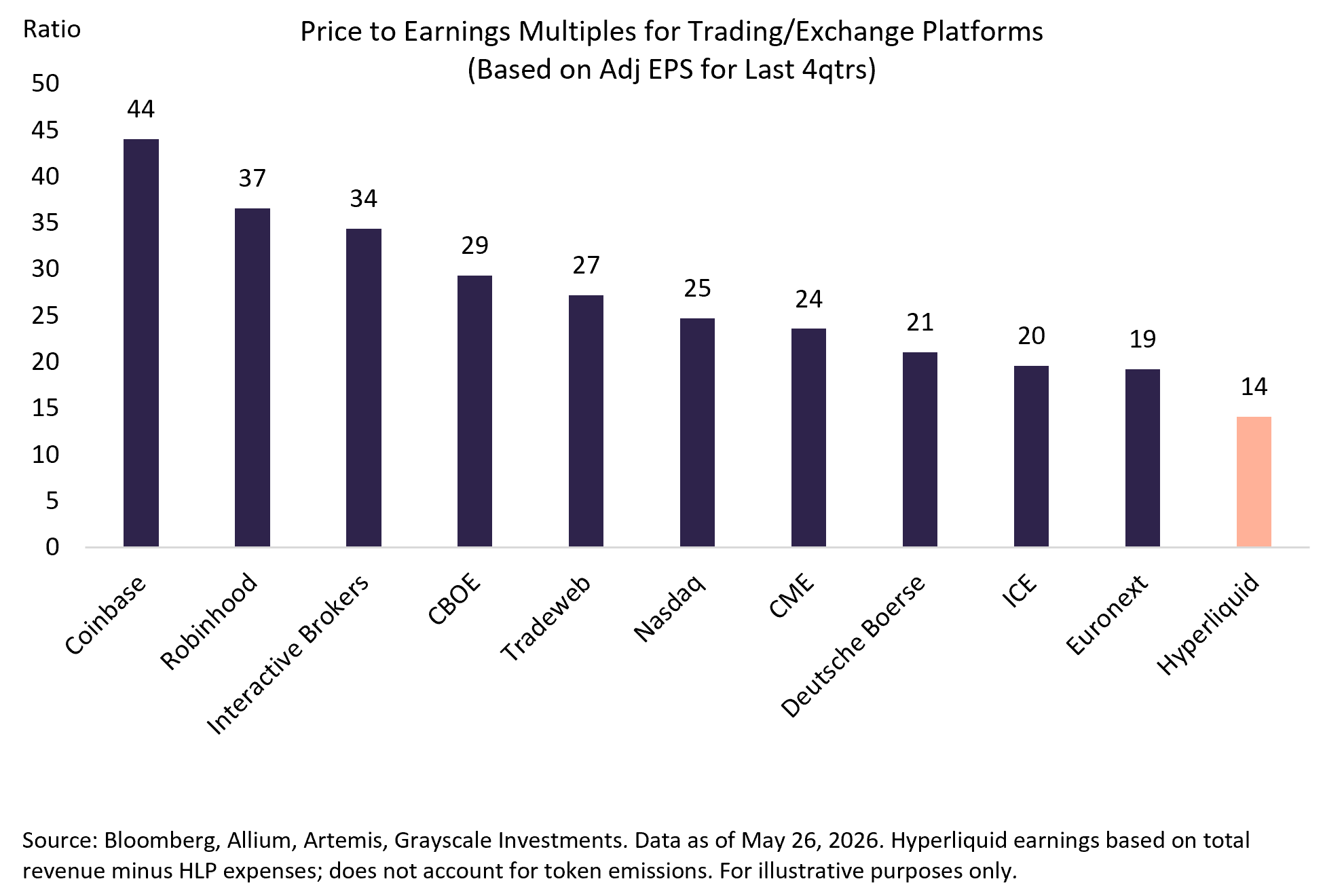
The HYPE token powers the network and accrues value from trading fees, which last year totaled around $800 million.1 Based on the platform’s financial metrics, the native token looks undervalued vis-a-vis exchange/trading-related comparables in public equity markets (Exhibit 1).
Hyperliquid is not yet available to US users due to regulatory ambiguity around perpetual futures and decentralized exchanges. However, recent comments from regulators and ongoing efforts in Congress could change that and create a meaningful catalyst for further growth.
Key Takeaway: Hyperliquid is a DeFi platform specializing in perpetual futures that is increasingly competing with traditional exchanges. Regulatory clarity in the US can expand access to Hyperliquid to new users and, in our view, help drive value to the HYPE token.
Exhibit 1: Based on the market capitalization of its HYPE token, Hyperliquid trades at a lower multiple than other platforms
- Source: Allium. Data as of May 27, 2026